– Provocation is the entire purpose of fiction

Alice T shirt finalweb

Alice T-shirt design by Jason Rainville.

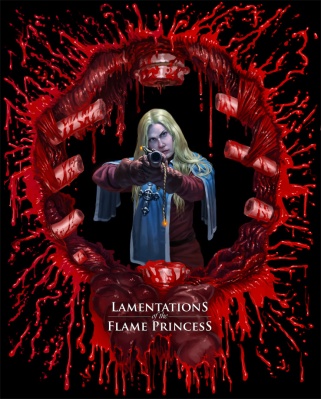
James Edward Raggi IV, owner of Lamentations of the Flame Princess (LotFP), helpfully explains the Old School Revival/Renaissance (OSR), his business model, living in Finland and the purpose of fiction! Towards the end are some bonus comments by co-author of the company’s recent supplement Towers Two, Jobe Bittman.

For those not in the know (like me): could you give the three-five sentence pitch about LotFP? It’s an “OSR” game compatible with most D&D retroclones? What does that mean?

LotFP Owner James Edward Raggi IV: Lamentations of the Flame Princess is my publishing company focusing on weird and/or horrific gaming material. Sometimes that involves high-concept projects that sell many thousands and win all the awards (A Red and Pleasant Land), and sometimes it involves scummy, degenerate projects that nobody will admit to liking and can only cause trouble for all involved (Towers Two). Absolutely anything goes because we’re all about interesting, strange stuff and not attempting to please the general gaming public.

It’s set up more like a creative studio than a traditional gaming publishing company, and every release is self-contained; there is no «game line» where you have to keep up on all the releases to know what’s going on.

LotFP also has a vibrant third party publishing scene, and we try to keep up with all that on the LotFP site so check that out. People really are playing this game in some numbers and they’re producing their own material, pro and semi-pro, for it.

It is an OSR game, which means LotFP rules are compatible with adventures written for over 100 different OSR games, and LotFP adventures are able to be run as-is with the rules for all of those different games.

«OSR» means players and publishers of games and supplementary material based on a rules skeleton created by pre-1984 versions of Dungeons & Dragons. Some of us in the OSR are all about pretending it’s 1981 in playstyle and tone and product aesthetics, and some of us just find the rules framework interesting and use it as a common base from which to develop our original and unique ideas that nobody would have wanted in 1981. We’re a varied bunch.
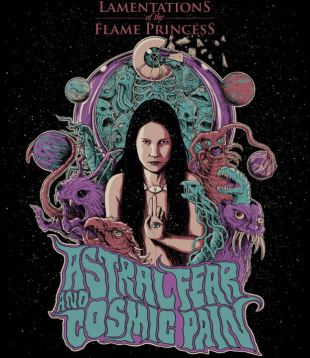
AstralFearDISPLAY

Astral Fear T-shirt design by Yannick Bouchard.

Could you say a little about the setting of LotFP, or isn’t there a default setting?

Raggi: There is an implied setting, but no real «official» setting. I set all my material in 17th century Europe, because I think of LotFP as a horror game. In no other time period have people been so horrible to one another, and combined with famine and disease it makes the perfect backdrop. Not to mention in that time period exploration and exploitation, two common RPG activities, were commonplace across many different cultures. It’s just a shit time to have been alive, and that makes for great gaming.

Some other LotFP authors embrace the real-world-as-setting idea, others don’t.

I’m getting a “metal” or even “punk” vibe from large parts of the OSR. Could you say something about the balance between provocation-for-provocations sake and the more profound themes in your games (oddly phrased question, but you might see what I’m getting at)?

Raggi: What you’re getting at seems completely irrelevant to me. «Is this fun? Is this interesting? Are there meaningful choices for the characters to make?» are the important bits. These games are fiction, completely unrealistic adventure fiction, designed for an audience that is instructed to do what they want and not just blindly cooperate with what they are «supposed» to do. «Profound themes» are simply authorial masturbation when «to hell with it, kill everyone and burn this place to the ground» is a valid player choice in any particular situation. Themes might make the material interesting, and intrigue a Referee enough to run it for their group, but even that in no way means the players are going to interact with those themes in a way the author might consider meaningful. You can’t force it.
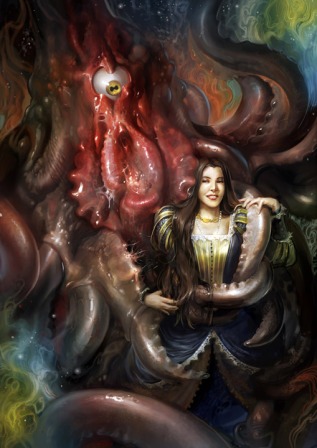
BTAMContributorDisplay

Better Than Any Man image by Cynthia Sheppard.

«Provocation for provocation’s sake» makes no sense in terms of fictional media. Provocation is the entire purpose of fiction, whether you want to get an audience’s adrenaline pumping, or get them horny, or sadden them, or make them laugh, or disgust them, or whatever. The manner in which you do it is merely a matter of personal preference and style. And anyone who doesn’t like it can just stop watching/reading/listening to it and try something else. It’s not real life and doesn’t follow the rules of real life.

Personally, I enjoy creative work which comes across as reckless and/or irresponsible. Sure, «mature» and/or comfortable is OK sometimes, but the pure energy coming off of work that just doesn’t give a fuck is exciting and inspiring and more likely to confront me with ideas I would never have thought of myself, which is what I’m paying for when I buy things.

I think the OSR has shown itself to be accepting of people with less-restrained imaginations, people even more outside of the mainstream than all us dice-chuckers already are, and so that’s where they’ve hung their hats. It really upsets the other old-schoolers who internalized the criticism of the 80s Satanic Panic, haha!

What games do you play these days? Are you in a campaign?

Raggi: As far as tabletop gaming goes, I just play my own game, unfortunately. I’m not into gaming over Skype or G+ hangouts, I’m too stupid to pick up spoken Finnish so I’m not comfortable joining someone else’s game here and making them all speak my language, I don’t have the time or energy to run multiple campaigns in different systems, and when I visit conventions I’m working and after 8+ hours a day on the convention floor the last thing I want to do is spend more hours around gamers doing gaming things.
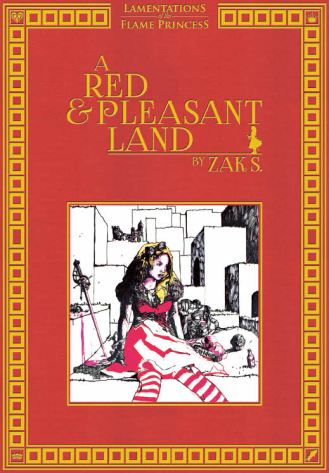
RPLCoverdisplay

RPL Cover, art by Zak S, design by Jez Gordon.

I do keep up with online conversation and several game lines so I’m not completely out in the wilderness, but these days my inspiration for creating stuff comes from outside gaming, and I’m comfortable with the mechanical base I’m working from already so I’m quite happy not playing every (any) fucking thing that people decide is the hot new thing in gaming.

For non-tabletop stuff, I play games like Banished and Elder Sign: Omens. Not so much adventure or RPG type games.

What other upcoming products interest you? What other games and ‘zines do you follow?

Raggi: I keep up with the Doctor Who and Trail of Cthulhu RPG lines, plus I try to keep up with the OSR releases. I collect first edition Warhammer Fantasy Role-Play stuff plus keeping up with Goodman Games’ more general products keeps me in good stuff. I just yesterday received their Grimtooth’s Traps reprint, and backing that was so expensive (worth it though, it’s a hell of a book!) that I volunteered to do something for the Monster Alphabet just so I could get a copy of that myself without forking over money.

Zines are fun but I like more substantial works better. Yoon-Suin, Fire on the Velvet Horizon, the Grimtooth book, things that really feel like the creators had to persevere and probably freaked out and maybe cried putting the thing together but still pushed through to finish a larger project, those end up impressing me more. Then again, a zine with a couple dozen pages are full of more fire and «this is a great idea WHAM it’s down!» kind of expressiveness, so it’s not like they suck or anything.

What’s it like to do your business from Finland? How do you like it there? How does it compare to the US? Why are you based there?

Raggi: I moved to Finland because Finnish women are pretty and much more willing to let me touch their genitals than American women were. I had been stuck in the American South all of my adult life and between the hot weather and all the Guns n Jesus rednecks I just wanted out. Vermont might have worked just as well but I ended up in Finland instead. There’s a lot less hot weather here, nobody goes on about their guns, and there’s very little concern about Jesus. But still, Finnish rednecks exist (just drive about 20 minutes outside any of the 3 cities in this country and you’ll find them!), they just go on about different stupid shit than guns and Jesus.

I haven’t been to the US in ten years and I swear everything I hear about it these days sounds like Mad Max. Should be fun going back this year for GenCon.
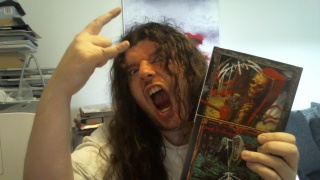
Picture 148

LotFP owner James Edward Raggi IV.

There seems to be a great energy to the OSR scene, but I have mainly been paying attention to other style indie/DIY games. How would you describe the difference between the communities? Is there a conflict? 

Raggi: Conflicts are between people, not scenes. No thinking human being attacks other people because of the games they play, and there’s a lot of crossover between the two scenes anyway. Internecine OSR internet slapfights happen too, nobody intelligent decides to be buddy buddy with a stranger just because they both roll 3d6 down the line for their characters’ ability scores.

But the main difference between the OSR and «indie» communities would be that OSR people work new ideas around familiar mechanics so everyone keeps the same common ground, and the indie/DIY community until recently reinvented the wheel from scratch for every new idea they had. FATE- and Apocalypse-based stuff seems to have changed that recently. While that may work for them with well-established genres (every system has its own version of dungeoncrawling, right?), I’m not sure it serves their more niche or high-concept ideas well, but they’re not my projects so what do I really care?

Where would you recommend someone interested in checking out the OSR get started, besides LotFP? The cross-game compatibility seems like one “killer app” of this tradition.

First let me plug my stuff. If you’re into print products, head over to the LotFP store for all the current releases and T-shirts and all that. We’ve got Towers Two, World of the Lost, and reprints of the Rules & Magic and Red & Pleasant Land books at the printer now and those should be delivered within a couple weeks. You can also order LotFP books through your local game store but TT and WotL will take a little while to filter through the distribution chain (there are still some R&M and RPLs out there in stores currently).

If you want your game books in PDF form, we’ve got a bundle with every release from LotFP ever for 60% off, or pick and choose what releases you want from the RPGNow storefront. We’ve got free versions of the rules and two free adventures for download there, including the 100+ page Better Than Any Man, one of the better things LotFP has ever done. (Make sure your Adult Filter is turned off to see everything).

Now if the whole heavy metal attitude isn’t your thing, there are a ton of choices and most of them have free PDF downloads. I’d recommend Labyrinth Lord or Basic Fantasy RPG for rules, and for free supplements I’d track down the annual Secret Santacore and One Page Dungeon projects. And get yourself Narcosa.

If you’re wanting some cool projects that aren’t free, off the top of my head I’d recommend An Echo, Resounding (all of Sine Nomine’s projects are cool), Yoon-Suin, and the Cthonic Codex.

_______
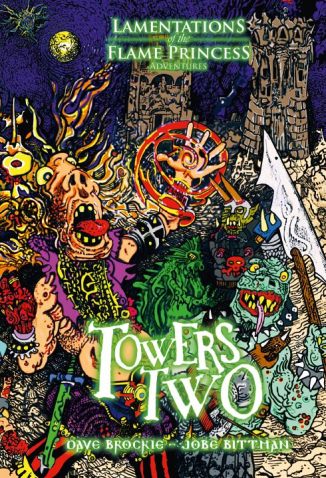
TowersTwoCoverDisplay

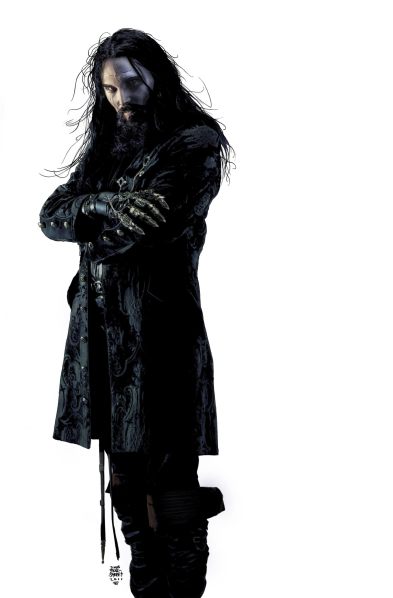
Towers Two cover by Dave Brockie.

One recent supplement for LotFP is «Towers Two». Co-author Jobe Bittman also took the time to answer some questions for Imagonem:

Towers Two co-author Jobe Bittman: «Towers Two» was a tabletop roleplaying game adventure being written by former GWAR frontman, Dave Brockie, (aka Oderus Urungus) for the Lamentations of the Flame Princess game system. Unfortunately, Brockie died in 2014 before completing the adventure so I was brought in to finish it. Good thing too! Raggi wanted to take the adventure into a high-minded sci-fi direction. I put the brakes on that shit and steered Brockie’s aborted fetus right back into the gutter and pissed on its rotting face. In «Towers Two», the characters measure dick size with squabbling twin princes, Zal and Razak, that fight over control of the land from the safety of their towered strongholds. The adventurers can choose to side with one of the brothers or carve their own path in the land of Mlag. I usually try to avoid spoilers, but if any players out there are reading this: /Search the rectum of every last corpse!/
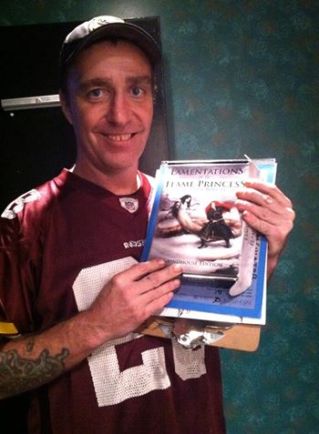
brockielotfp

Former GWAR frontman, Dave Brockie, (aka Oderus Urungus).

What is Deathfuck magic?

Bittman: Deathfuck is new power source for magic discovered by the evil necromancer, Razak. The strange magic is fueled by the brain juice and spinal fluid of living creatures. Practitioners of the dark art use a host of weaponized sex toys to puncture the skull and spinal column and forcefully extract this magic nectar. The victim is fucked by sex weapons into chunks of bloody meat.

Other interesting nuggets about the supplement?

Bittman: As submitted by Dave Brockie, one of the most frequently encountered monsters are Urukhai black orcs. Obviously, off-the-shelf orcs don’t fit with the design aesthetic of the LotFP game system; and the Tolkien estate would probably have issues with the fellatio and scatological interests of Brockie’s breed. The orcs were recast as Pig-men and have an origin that may be discovered within the adventure. In the interest of preserving Brockie’s legacy, his entire unedited manuscript is included at the end of the book. I think Brockie would have been happy with the way the adventure turned out. It’s visceral and raw, but at the same time has a sense of humor.
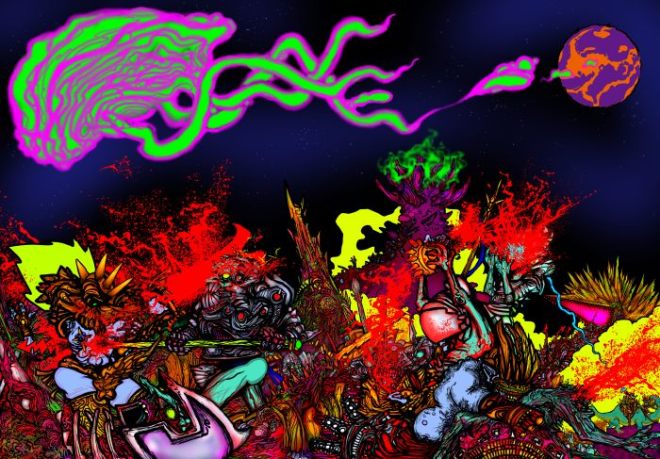
LoiGoiWeb

LoiGoi pic by Jeremy Duncan (art from Towers Two).

Grey Maze

Utburd

In Norwegian folklore, utburd are the phantasmal incarnations of the souls of unbaptized children. It is forced to roam the earth until they can persuade someone to baptize them and/or bury them properly.

When the utburd manifests, it may assume many shapes, growing large as houses or transforming into grotesque animals.

last ned

Skogstjern («Forest lake») – Theodor Kittelsen (1893).

The utburd is said to chase lone wanderers at night and jump on their backs, demanding to be carried to the graveyard, so they can rest in hallowed ground. The utburd grow heavier as they near the graveyard, to the point where any person carrying one could sink into the soil. If one should prove unable to make it into the cemetery, the utburd kills its victim in rage.

In some stories, the spirit of the unbaptized child can be given peace by naming. A traditional formula:

Eg døyper deg på ei von / anten Kari eller Jon.

I baptize you by faith / Kari or Jon

The word «utburd» means «that which is taken outside» and refers to the historical practice of abandoning unwanted children in the woods or in other remote places. This could be children born out of wedlock or to parents who lacked the means to care for them. It was believed that the ghost of the child would then haunt the place where they had died or the dwellings of their killers.

Conceiving a child out of wedlock was considered a great shame in the old peasant society, and there are many stories of girls who killed their newborn or unborn and dumped them in forest lakes. According to King Christian V’s Norwegian Code (1687), this crime was punishable by death. In 19th century Norway, most murders were still infanticide.

The belief that utburd were enraged and seeking revenge gave them the reputation as one of the most menacing types of ghosts in Scandinavian folklore.

There are also songs connected with the stories of the utburd. The Ola-tjedn-låtten from Valdres is one of the most well-known, and the refrain relates the lullaby the mother sings for the child:

I Ola-dalom, i Ola-tjedn…

Another kind of belief in the utburd related that if the placenta was not burned or buried after birth, it could grow into a terrible creature it would be hard to get rid of. The creature was often described as having the shape of a wolf, and made a lot of noise by howling like a wolf, barking like a dog, neighing like a horse or grunting like a pig. Many places the sound is described like a combination of all the loud animal noises imaginable in one single outburst. People who heard the ruckus risked dying from fear. One feared the utburd would return in an attempt to seize the place of the infant in its cradle, whereupon the infant would be consumed.

https://en.wikipedia.org/wiki/Myling
https://no.wikipedia.org/wiki/Utburd
https://no.wikipedia.org/wiki/Christian_Vs_Norske_Lov

10 Mythical Beings from the Scandinavian Folklore (the dwarves and Valkyries sound more like something from Norse mythology. The rest is ok, if brief. The Wikipedia article at the very end seems pretty decent):

https://en.wikipedia.org/wiki/Scandinavian_folklore


White Wolf’s lead Storyteller: – There will be a release in 2016

martin

Martin Elricsson, lead Storyteller at White Wolf. Art: Tim Bradstreet.

Martin Elricsson, Lead Storyteller and Brand Architect at the newly Swedish White Wolf (recently acquired by Paradox Interactive) kindly took the time for a brief Q&A with Imagonem about upcoming plans.  

Which game lines do you plan to revive, and when?

We prefer the term ”rise from torpor”. An elder awakening from a century of slumber is starving and hungry for fresh blood. So are we. Initial plans include products based on all of the ”classic” World of Darkness lines. It may be a while before we get to Mummy: The Resurrection tho :) Our launch plan will always be a secret until it’s not. I love the speculation and mystery surrounding future releases we saw in the 90’s, so we will definitely play with that aspect. Hints and clues to what will come next will appear in future products and WW communiques. There are actually a few of them out there already.

Will you prioritize computer games, or will we see  pen-and-paper soon?

Short answer is that the economic centre of the company will be computer games. Unless something weird happens and people start buying roleplaying books, WoD novels and comics like they were Harry Potter. As things are now tabletop publishing hardly breaks even. Spiritually the core will always be tabletop rpg and larp. The Bibles we’re working on for computer games are written as if they were texts for a new tabletop edition, and will most likely be released in that format. Combined launches of digital and tabletop also games seem to make a lot of sense. In the last few years, focused and easy-to-use products like Mutant: Year Zero and Lamentations of the Flame Princess are selling unexpectedly well. Their brevity and low threshold makes them perfect for introducing new players to the hobby, while the monumental classic-WW-style books generally sell poorly and are more read than played. If future editions of WoD are actively used rather than collected we have done our job.

What form will the computer game take? MMO? Are you able to bring over content from CCP’s “World of Darkness”?

All releases will be announced when we feel confident they will release on time, reach our very high bar of quality and have enough material to be discussed by the community in a meaningful way. We own all assets connected to WoD, including the CCP content that they kindly gave us as a bonus when we made the purchase of the IP. I for one intend to make sure those 8 years of work by a hundred exceptionally talented creators doesn’t entirely go to waste.

You have mentioned larp plans. Will this be a new international “Camarilla”? How will the campaigns work, and what kind of system will you use?

We hope to be a resource to local Mind’s Eye Theatre troupes, not a dictatorial central committee. Plans for some tools for communities and global character tracking are underway but way to early to talk specifics. What we can say is that MET will not be the only larp in town. Official White Wolf larps will not use Minds Eye Theatre rules but be organized more like Monitor Celestra or College of Wizardry.

unnamed2

Images from the CCP MMO concept design, previously unreleased.

Could you explain a little about the deal you’ve made with Onyx Path? What will be the main difference between “The Chronicles of Darkness” and “The World of Darkness”?

There is only one WoD. Chronicles of Darkness is a sandbox tabletop setting featuring the same broad creature types as the World of Darkness, but it is not the same world. It will not be spun off into computer games, novels, TV or anything else. It’s our specific brand for great metaplot-less, flexible, table-driven tabletop rpg. With the 2nd editions CoD has really found a separate identity from WoD and will continue to become even more of it’s own thing. We still own it but it’s Onyx Path’s baby. I love CoD and find that is a much more playable game with a more vague and unsettling aesthetic than WoD ever had. Too bad it never sold for shit and that old players hated it. It lacked the epic scope and the punk passion of the classic WoD. Had it done even remotely as well as the classic WoD things would be very different.

Onyx Path also have a license to produce nostalgia books for the classic WoD settings. These are official but set in the same nebulous ”eternal nineties”, using the old-school buckets-of-dice-system featured in the original lines. Future editions will move the setting, mythos, metaplot and mechanics almost 15 years forward into present day. It’s the same world, but a lot has changed. It’s useful to see the Classic and Anniversary books as highly subjective. The ultimate truth can’t be found in the books, but we can glimpse it through the multiplicity of perspectives presented. For instance Humanity is a mechanic presented from the Camarilla point of view, while Paths of Enlightenment give us the Sabbat perspective on the subject of morality. None of them are True. Both are models and simplifications.

Could you explain the vision for the new setting and metaplot, and the “eastward shift” (focusing on Europe, Russia and the Middle East)?

”What if the monsters are real, hidden among us?”, is the elevator pitch for the new metaplot. Gothic-Punk is dead and buried as an aesthetic. All the Apocalypses of the classic WoD has happened. In 2001 the Gehenna-war for the graves of the Antediluvians began. In 2006 the rise of the Wyrm and the inevitability of ecological Apocalypse became publicly known. The Technocracy has won, we surrendered when we allowed machines to shape our values and minds, trapping us in the paranoid realms of our personal filter-bubbles. At the same time we are applying engineering to quantum mechanics, making magical theories manifest as Science, so all hope is not lost. In line with this we integrate dramatic real world events to feature prominently in the story. We face difficult social subjects like the rise of fascism, religious fanaticism and the death of ideology in mainstream politics, head on. This naturally leads us to focus on areas where dramatic change is happening. Also there are more books on the US of Darkness than the rest of the world combined.

When can fans expect to see the first products for these new lines from Paradox and partners?

There will be a release in 2016.

What clans do you and CEO Tobias Sjögren belong to? 

I’m a Toreador, he’s a Ventrue.

Any Mage plans?

Yes.

Will the Werewolves remain crypto fascist eco-terrorist?

More than they have ever been. Global Warming has released the Wyrm-tide. The end of the Impergium (ancient Werewolves hunting humans to keep their numbers manageable) seems like a terrible mistake in retrospect.

What sucks most (pun intended) about being a Vampire?

The obsession with self-deception and appearing moral or darkly glorious to their peers. Never being able to be truly proud of who you are. Even The Sabbat need to think of themselves as ”good” in their fight against the Cam oppressors and the rising Ancients. The need to play the (anti-) hero is tragic. At the end of the night they’re addicts to sex, blood and power, masking the pursuit of their next fix as part of some grand scheme or other.

unnamed

Images from the CCP MMO concept design, previously unreleased.

Where did White Wolf “get it wrong” last time around? What are your least favorite parts of the IP?

Anything that smells of Fantasy. The attempt to create a deep mythology by linking the setting to Exalted was the worst choice ever. That was the last step in WoD’d death-march from being an artistic horror-IP to full on immature, escapist Urban Fantasy. The inability to deal with and integrate real-world events in the setting. If you can write about the Holocaust, you can write about 9/11. Fear is the death of creativity. The game was always best in the hands of storytellers who dared to place the story close to reality, often in their own cities, featuring real places and people.

And vice versa: what were your favorite games and concepts?

Too many to list. The books are shock full of profound insights, human stories and heretical interpretations of real-world mythology and subculture. My most collected and (through my and Adriana Skarpeds political game series Prosopopeia) played game is Wraith. A small selection of my favorite books include 1st ed Vampire, Fatal Addiction, Gilded Cage, Damnation City (for V:TR, but very useful for V:TM) and Love Beyond Death.

[Edit 02.16. Elricsson has asked for these clarifications to be added to the article:]

Clarifications:

//

It wasn’t a painless choice revisiting the classic setting instead of NWoD. I’ve always supported that line, shamelessly ”been inspired” by it in other work and wanted it to make big waves, especially since I love it’s tonality and ground-up design thinking. But it’s hard to argue against CWoD as the setting that made the most dramatic cultural impact overall. The death of the publishing industry and lack of tabletop rpg-hype at that time combined with quite strong fan reactions never gave it a chance to go pervasive. It would have made perfect sense for us to cancel CofD entirely to direct all focus to WoD and avoid brand confusion as new players come in through future digital products. I’m happy we decided against it. Having CofD continue as it’s own thing is the closest we’ll get to confessing that it may be the better tabletop-only setting of the two. But to turn it into the centre for our transmedia-storytelling plans for the future would mean adding metaplot and characters to it, killing its identity completely. Made less sense than letting the beloved characters and myth of the dark original live on and evolve.

For more on new White Wolf’s plans for the future check out the announcement video from german WoD-con Tenebrae Noctis held before Christmas.

https://www.youtube.com/watch?v=sEoG8YQrLuE

 //


The Magic Happens

6845023042_588fb056b2_k

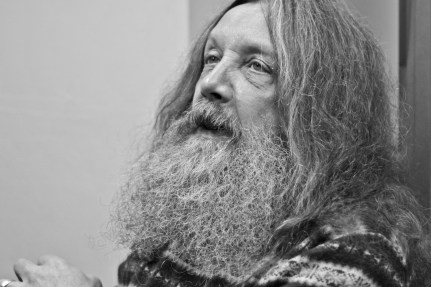
Photo by Chris Boland / http://www.chrisboland.com. “Alan Moore – Cambridge, UK – March 2012”. (CC BY-NC-ND 2.0)

Alan Moore Q&A on Goodreads, selected hightlights.

Magic

“As regards how I use magic in my work, this has changed significantly in the twenty years or more since I took up the practice. Whereas in the beginning there was a great deal of ritual and serious magical experiment, both because this was the only recommended way to go about things and because it was a very exciting and pyrotechnical experience, these days I have internalised my ideas on magic to the point where anything creative that I do is perceived as a magical act. I will be bringing as great a weight of magical consciousness, perception and concentration to a chapter of Jerusalem or Providence as I would have done to the rituals that resulted in The Birth Caul or Angel Passage. Basically, I have understood that art and magic are precisely the same thing. This is not a way of saying that magic is a lesser thing, that it is ‘only’ art at the end of the day, but instead of saying that art is a far, far greater thing than its currently degraded state as a commodity or as simple time-filling commodity might lead us to suppose. If you happen to live within a worldview that supposes our entire neurological reality to be made up of words, and happen to believe that certain intense forms of language might therefore be capable of altering that neurological reality, then picking up a pen or sitting down at your keyboard feels like a very different proposition.”

“It’s really only fictional people that live in horror stories. Real people, even if they’ve been the subject of special rendition and are currently receiving electric shocks to their genitals somewhere in Egypt, are not in a horror story: they are in the same ordinary reality as you and I, which we are all a part of and which we all, by our actions and inactions, help to create. I think it would be best if we agreed that we are living in the real world, and if at times it reads like a horror story – or worse – then we are the only authors, and we are the only authority that is in a position t fix or change that.”

Scary books

“Q: Hey Alan, maybe I am wrong but you don’t seem like the kind of person who gets scared easily, have you ever read a book that horrified you? If yes, which one?”

A: “If I had to pick just one, then it would probably be The Blind Owl by (and I’m almost certain to mangle the spelling of this, not having the book to hand) Sedagh Heyat. Please don’t take my word for this, but instead read the book yourself and see if you agree. My guess is that it will make you feel almost ill with dread, and as worried for your own sanity as you would be by a long night of fitful sleep and terrible recurring dreams. Enjoy.”

“I suppose if I didn’t believe that anarchistic ideas in literature could have a useful and positive effect upon, as you succinctly and accurately phrase it, “the catastrophic trajectory of our species” then I wouldn’t have any incentive to get out of bed and start writing (or breathing) in the mornings.”

Q: “Who/what are your biggest literary influences?”

A: “Almost everybody I’ve ever read, if I’m honest, has influenced me either positively or negatively. Major influences would be William Burroughs, for the purposeful and shamanic energy that he had in his writing and his ideas; the non-musician Brian Eno simply for his eternally curious and adventurous approach to creativity itself; and more recently the extraordinary Iain Sinclair for the level of attack and crackling intensity that comes with his furious approach to language.”

Lovecraft

Q: “Your and Jacen Burrows’ Providence is unbelievable, especially in terms of the depth of your layering of H. P. Lovecraft allusions. I was wondering which of Lovecraft’s stories most petrifies your pubic hairs…why does this particular selection unsettle you and shake you to your horror-loving core?”

A: “I’m glad that you’re enjoying Providence, which me and Jacen and everyone involved are insufferably proud of. As for the Lovecraft story which most frightened me initially, this would have to be the first such tale I read, which was ‘The Statement of Randolph Carter’ with its famously spine-tingling last five words. Returning to Lovecraft as an adult, though, and especially with an eye to working on Providence, I have found a much richer and more complex writer than I remembered. This is no doubt because my own understanding of Lovecraft has become richer and more complex as a result of all the fine Lovecraft scholarship that I’ve been assiduously absorbing over this last couple of years. These days I find it’s not an individual Lovecraft story that particularly inspires me, so much as his whole body of work and the radical approaches to writing that it contains. His disorienting technique of giving a list of things that Cthulhu doesn’t quite look like a combination of, for example, or his insistence that the Colour out of Space is only a colour “by analogy”. There is a kind of prescient alienation in the work of H.P. Lovecraft that I suspect will form a much larger part of his legacy than what Lovecraft himself termed his “Yog-Sothothery”.”

On writing

Q: What happens to you when you write?”

A: “I probably shouldn’t play favourites, but for my money this is perhaps the most interesting question I’ve been asked all year. I don’t know. I don’t know what happens to me when I write, because I’m not sure if we have adequate language to describe, even to ourselves, what it is to use language in a purposeful way. I know that my consciousness, if I am immersed in writing something demanding, is moved into a completely different state than the one which I inhabit during most of my waking life. Neither is it like dreaming, having much more focus and control. If I’m writing, as I often do, something which requires messing around with the structure or vocabulary of the English language, then I find myself entering some very unusual mental spaces indeed. Writing the Lucia Joyce chapter of Jerusalem, ‘Round the Bend’, I found myself in a kind of synaptic cascade-state that had a delirious, mind-expanding bliss to it. By contrast, writing the collapsed future-vernacular of Crossed +100, I found myself ending up slightly depressed just by the experience of having a limited language with a subsequently limited number of things that the characters could think, or feel, or conceive of. What I suspect is happening is that, as started earlier, our entire neurological reality can be seen as being made from words at its most immediate level. When you descend into this level of our reality, the code of our reality if you like, then whether consciously or not; whether deliberately or not, you are working magic. So, the answer to your question as to what happens to me when I write, is the most banal and useless answer you will ever get from an author: the magic happens. I hope that the fact that it’s me saying that and that I mean the above statement with absolute conviction, along with all of its potentially frightening implications, will be enough to make it sound a little less fatuous.”

Q: “What is your favorite science-fiction novel of all-time?”

A: “I don’t tend to think in terms of favourites, as that would make my otherwise enjoyable tastes in relaxation into something of a competition. A (very) brief and changeable list of recommendations, in no particular order, would be Mike Moorcock’s Cornelius quartet, Walter Miller’s Canticle for Leibowitz, John Sladek’s Muller-Fokker Effect, Brian Aldiss’ Hothouse (one of the first science fiction novels I ever read), Bester’s The Stars My Destination, Mike Harrison’s The Machine in Shaft Ten, Ballard’s Unlimited Dream Company, Phillip Bedford Robinson’s Masque of a Savage Mandarin, Samuel Delaney’s Dhalgren, Ellison’s short stories, Judith Merrill’s anthologies, Disch’s Camp Concentration, Spinrad’s Iron Dream, anything by Steve Aylett, and so on, potentially, forever.”


Stemmen fra ådalen

En blog om rollespil af Morten Greis. Fra Tryggevælde ådal en dyb klang. Elverpigernes dans. Røre i det hvide slør. Disen hyller landskabet. De gamle stammer krogede trolde.

christines rant

This is my speaker’s corner where I can rant about popular culture, geeky and general stuff that amaze or irritate me. Many things do. Irritate me, that is.

Realm of Melpomene

"I reject your reality and substitute my own!"

anyway.

"I reject your reality and substitute my own!"

Nordic Larper

Thoughts on scandinavian style live action roleplaying

Nørwegian Style

Norwegian roleplaying games in English