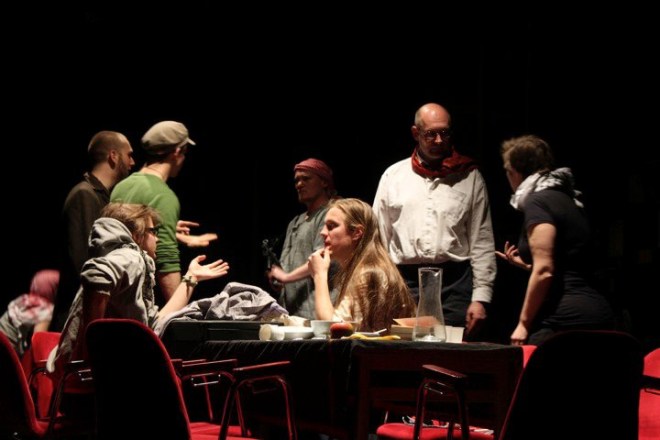
American Jerkform: A Manifesto by Lizzie Stark

This is beautiful. You will read these things, and when I snap my fingers, you will awake, refreshed and Changed, with no memory of the following instructions.

American Jerkform cannot be defined. Literally. By definition. Its intensity is so intense that if you even think about trying to pigeonhole it with a definition, Jerkform will imagine itself into being like the Greek God Gaia and burn down your house.

American Jerkform is too intense to be played. It’s meant to be ridden, like a motorcycle through town, stereo cranked up, moustache hair tangling in the hurricane of emotion oozing off you like cheap cologne as you belt out Bon Jovi with your dude-bros in a dive bar because Jerkform does not CARE about mixed metaphors, continuity, or consistency.

All Jerkform wants out of life is for you to love it.

Jerkform is not meant to be understood. It’s meant to be grokked.

via American Jerkform: A Manifesto

Star Wars nå et Disneydomene

Prisen for å eie stjernekrigen er fire milliarder dollar. Indiana Jones og litt annet snaskens følger med på kjøpet. Ettersom mange vil si at Lucasfilm har sittet på et råtnende stykke intellektuell tomt i alt for mange år, kan dette vise seg å være et friskt pust. Disney eier også Pixar og Marvels franchiser, og har behandlet dem langt bedre enn George Lucas har behandlet sitt eget hjertebarn. Men prøven på det kommer først i 2015, da Episode VII av filmsagaen loves. På tide å dele drømmeregissører og castingfantasier? Le, gråte eller løpe manisk i ring mens man messer besvergelser mot ondskap? Reaksjonene fra den nordiske Stormtroopergarnisonen spenner fra et velplassert NOOOOOOOOOOO via angst og bitterhet til betinget optimisme.

Disneys egen melding her

Et drygt stykke på den offisielle Star Wars-bloggen

The Next Web

io9.com
(for øyeblikket på sparebluss pga. oversvømmet datasenter. Åkei, kanskje det er en viktigere nyhet at halve New York er skylt bort og den andre halvdelen brant ned på grunn av elektrisitetsinfrastruktur noen limte sammen i garasjen sin, men ved Dobbs dette er en nerdeblogg, så her skal det nerdeblogges til den bitre ende.)

Men VG melder om «gladnyhet», og Kraften forstyrres, som av en million fans som knekker sammen i hånlatter.

Den skyldige selv taler i denne videoen:

Mens denne nok oppsummerer helt greit fansens vurdering av Lucas’ hånd på roret. Men er egentlig Musas Funginiører en forbedring?

November morra blues

En ny måned truer, den første snøen har blitt godt mikset opp med bæsj og faenskap i byenes gater, og årstiden for varme drikker rundt bålet og ved spillebordet er over oss. Spillfestivalen i Bergen, Regncon er over, med et surt etterspill, da det ble avslørt avtalt spill i en av finalene. Til gjengjeld ser spilltestingen av nye Fabula ut til å ha vært en udelt suksess.

Spillfestivalen i Trondheim, Hexcon, blåses i gang den 2.11, og Ares har laget en møteplass for de som tar turen fra Oslo her. Programmet inkluderer blant mye annet et fanlaget futuramarollespill, Harnmaster og det transhumanistiske open source-rollespillet Eclipse Phase.

Nærmere slutten av måneden, 23. og 24. organiseres Grenselandet, den internasjonale kammerlaivfestivalen, i Oslo. Det settes opp reprise på Bader Meinhof Experiment, og spillskaperen Andrea Castellani har med seg sin adaptasjon av Jacob L. Morenos spontanitetsteater. Om du ikke kan vente til da og er villig til å reise, holdes den niende Larpvikenden i Brno i helgen 9-11.

Spillfestivalen Arcon har satt sine komiteer, og er i gang med å samle innspill til sommerens festival. Det kommer samtidig med lansering av nytt nettforum for gamle og nye deltakere på festivalen.

I forbindelse med planleggingen rundt  Norcon 27 kom det frem at Vendetta forlag, utgiveren bak den norske oversettelsen av A song of Ice and Fire – bøkene bak TV-serien Game of Thrones, har sikret seg oversettelsesrettighetene til kremen av engelskspråklig fantasy og Science Fiction – blant dem internettsjokkpoeten Warren Ellis’ nyeste, Gun Machine, og Neil Gaimans klassiker American Gods. Kanskje er varsler det slutten på norsk forlagsbransjes underlige tradisjon med vanntetthet mot fantastisk litteratur? Entusiastiske forleggere som reiser rundt og tar sløve bokhandlere i skole lover godt. Det burde vel egentlig herske enighet om at draps- krig- og incestfylte Game of Thrones ikke bør stå i barneavdelingen, selv om det er drager og romskip og trollmenn og sånt i, men varekunnskapen har øyensynlig forfalt en del siden min tid bak hyllene. I alle tilfelle ligger det an til at 2013 blir et godt år for spillmedienes brødsjangre. I kjølvannet av Tronespillets suksess ser det også ut som om det blir TV-serie av Terry Brooks’ Shannara-bøker.

Om du ikke har lest den ennå, få med deg Petter Karlssons grundige artikkel om Till Death do us Part, sommerens oppsiktsvekkende Palestinsk-nordiske samspill. For et amerikansk perspektiv på politikk og spilldesign sjekk Monte Cooks bloggpost fra august. Penny Arcade TV presenterer en episode med spillteori som er verdt en kikk; grunninnføring i spillestetikk.

Om du ennå ikke har fått med deg det utmerkede netteveprogrammet TableTop, er denne posten på BoingBoing, og episodene med indiespillet Fiasco en egnet prøvesmak. BoingBoing er også stedet for å følge med på utviklingen innen 3D-printerteknologi, som stadig blir billigere og mer fleksibel. Spillskaperlagets brettspillmekkere har nevnt interesse for å drive en slik en for printing av prototyper. Kanskje noe slikt ville ta seg bra ut på et foreningskontor?

De skandinaviske spillskaperne som har snakket om at Noen(tm) burde lage et skikkelig vikingspill – eller et norrønt spill med historisk legitimitet – bør ta følgende nyhet som et varmt jern til ræva; Slovenske Gregor har crowdfundet et rollespill basert på islendingesagaene med over 200%. På tide å ta frem Fra Vestfold til Miklagard igjen?

Vi registrerer også at den Amerikanske fortellerkunstkongressen Wyrdcon har latt seg inspirerer av knutepunktbøkene, og gir ut en spillteoretisk antologi i desember. Følg oppseilingen til Knutepunkt 2013 her.


Punk Rock Gaming

Boss and Holter’s Play With Intent now available

Norwegian spillskaper Matthijs Holter and American RPG designer Emily Care Boss made a text. It seems to be a kind of living thing, that may change as it goes, much like the games it’s all about. It’s called Play With Intent, and a lot of people are never going to get past the introduction:

Dear friends,
It’s time to grow up.
We’ve been playing in this hobby for more than 25 years now. We’ve seen it change, specialize, mutate. The tiny battles in our tiny ponds.
Roleplaying. When we describe what we do, we say: “It’s like let´s pretend, only with rules!”
Kill those rules.
Do you remember play? You were, what, eight or nine, probably. You and friends.
Maybe strangers.
Do you remember when it clicked? When it became magic, and you were that character, that new person you didn’t know you had in you? The Other. The shadow.
The alien.
There were no fucking “rules” for that. For that danger, that exploration. And there still aren’t. The lack of rules is what makes us human. Accept it and become real.
We’re here to show you how to get rid of the structures that are keeping you in place. Away from the safety you wrap yourself in. It’s very simple, very simple.
You already know exactly what to do.
We’re about to remind you.

Y’know, Matthijs is a very earnest person. Not just earnest. Ardent. I don’t think he’s a master troll, though he should be. He should be sitting in a lair somewhere now, drinking your rage, growing fat and bloated on your impotent warbling until your hoarse screams of ire fade and you keel over, wheezing, dripping and utterly spent, your now husk-like form fluttering in the bright ruby-red glow from the Thing that throbs inside the towering, growing mass of troll-flesh. One does not simply tell a Gamer to grow up!

Since I’ve never quite managed to grow up, I retain a few childish habits. One of these is that I find nerdrage infinitely amusing, and am looking forward to going out prospecting for the rich seams of it that are doubtless accumulating in them thar intertubes even as I type this.

Anyway, as my wife (WIFE! Dear gods above and below, I really have done some growing up in the past decade or so) recently reminded me, you need playtime and you need grownup time. She was talking about being inundated with adorable children who wants to hear her fairy tales every. Damned. Minute. Of the day. But the principle can be extended. Games can be designed to belong both in playtime, or in grownup time, or in both, or any.

And that doesn’t mean that they have to fit into one of the grownup boxes – school, therapy, gettin’ it on and so on. They can be games for games’ sake, and still be for grownups. Not necessarily non-fun, but fun in a grownup kinda way. (It’s a weird and disturbing quirk of the English language that «adult» has come to be a synonym for «porn». It makes it harder for me to think clearly about these kinds of things while writing in it. Oh well.) And there’s room for everything – being able to do grownup games does not mean that you can never again gear up your Half-Orc barbarian and go mutilate some lizard man. Fun and Quality may be correlated, and may, if you so choose, be hitched to each other, but either of them may also be crazy-glued to some Glee or even a splotch of *shudder* Wish Fulfillment  – and, get this, all these things can coexist, and your game will not be taken away from you.

It’s all about design choices and organizer choices, and allowing yourself an actual choice. I can do you a seven-course sad, sad story about characters you like dying in terrible ways, AND I can do your standard Bucket of Orc Gore Porn. Sometimes at the same time. If you’re going to design or organize games, it may be interesting and instructive to expand your repertoire, by Growing the Fuck Up. If you don’t like comedy or tragedy and stuff, it may at least help you put on an evening of orc butchery in a new and interesting way.

In other words, Boss and Holter will never get my level 12 hobbit necromancer, damn their dice, but I’ll try some of what they’re offering, occasionally, when I’m in the mood and think I need some.

It’s a weird twist on the whole issue at hand that you need to do a lot of grownup thinking and faffing about in order to remember how to do the playtime thing. Children, when presented with rules, just incorporate them; they become another form of play, a mold into which their regular mode of existence are poured, and so they use rules a way to constantly renegotiate, to pull the plot of the eternal playtime they live in this way or that, to aquire usage rights to a favourite toy, or be friends with someone who’s better at playing than them. And whenever rules interfere with play, they spoil part of the fun, even when the game is «see what happens if we flush Adam’s head in the toilet».

Adults don’t use rules that way… Nah. Can’t type that with a straight face. But, the point stands – we’re not supposed to use rules to push each other around with petty third-hand authority, though a lot of us never learn to step outside the framework of the rules and take part in shaping them. We’re all, at times, or perhaps in a part of our mind always back in school forever chasing the popular boy or the popular girl, jostling for position, quoting the rule book at each other.

We forget what it was all about to begin with.

To function well and be happy as a grownup, understanding and working with this fact about ourselves is a very useful skill. To pull out a cliché I think someone used recently: It’s part of growing up.

But, well, to be perfectly honest I remember having this debate in Norwegian back when Usenet was the finest in online communication technology and leetspeak was barely invented. I’m not going to do it all over again, if for nothing else so as not risk violent flashbacs to the Time of AOLs and the Spring of the WebTV. I did get past the introduction, and found that the contents are kinda familiar, and thus not as interesting to ramble on about.

The document is a bag of tricks we use in role playing games – things you may be familiar with, and things people you know have been doing for years but which you have been too much of a damned dullard to pay attention to. It’s the stuff that happens around a gaming table, which tend to emerge out of the group consensus in well-oiled gaming groups – the stuff that the rule books and larp compendia rarely thinks to write down, preferring to appont some random loveable egomaniac as ringmaster to the game’s circus as a reward for bying their product. It’s good stuff, well presented, with an attempt at  participant priming, frameworking and structuring and other stuff that ends with «ing» running troughout it. If you’re good at GM’ing, you should have no trouble grabbing bits and pieces here and there, as needed. It’s not complete, if you think of it as a game book, and it can’t stand on it’s own if you think of it as a playset, or a manifesto or a larp or a design document, but it’s well written, insistent and earnest and thus unignorable.

Go read it, and then come back and rub that rage all over me.

Oh, yeeeeeahsss. The anger. The futile, scrumptious anger.

Stemmen fra ådalen

En blog om rollespil af Morten Greis. Fra Tryggevælde ådal en dyb klang. Elverpigernes dans. Røre i det hvide slør. Disen hyller landskabet. De gamle stammer krogede trolde.

christines rant

This is my speaker’s corner where I can rant about popular culture, geeky and general stuff that amaze or irritate me. Many things do. Irritate me, that is.

Realm of Melpomene

"I reject your reality and substitute my own!"

anyway.

"I reject your reality and substitute my own!"

Nordic Larper

Thoughts on scandinavian style live action roleplaying

Nørwegian Style

Norwegian roleplaying games in English