Some happening RPG podcasts

I’d love to have a podcast listening habit, but I don’t. I love text. Anyway, I try to pay attention, and I listen to snippets here and there when something catches my eye. There are lots of cool RPG focused shows out there now, here’s a small sample (not even capsule reviews. More like skimming, sampling and thinking out loud).gauntlet
The Gauntlet

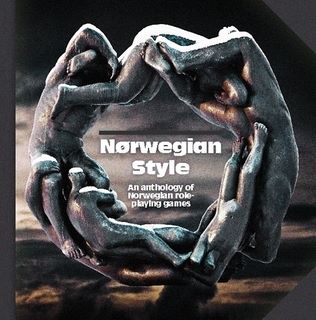
The Gauntlet Episode 39 keeps on delving into the indie RPG scene. From 26:59 onwards, there’s a special focus on Dungeon World and what makes it awesome, as they say. Dungeon World is one of the more well-known of the Powered by the Apocalypse World engine games. For a show often covering obscure shit like Nørwegian Style games, this is pretty much mainstream. Apocalypse World reskinned  with a D&D flavor? One of my groups will be dipping into it this spring. Some timestamps is a great improvement this year, as it alleviates podcast surfing for those of us with an attention span near 0.

I’m impressed how many games the hosts manage to play in addition to recording, editing and presumably holding down day jobs. I think the collective running it are considering a third, more Actual Play-focused, weekly show? Please check out their Google Plus community for news, if you have interest in keeping track of new (primarily) US indie games. There are online Hangout sessions, Face to Face meetups in the US… cool, cool. I will keep paying attention and letting the timestamps help me navigate to the content I’m most interested in.

You can also check out The Gauntlet’s Dungeon World podcast Discerning Realities. Episode 4 also out this week.

Backstory

backstoryPart of the One Shot network, Backstory is a charming new kid on the block. «BACKSTORY is an ongoing series of interviews with game designers and other notable members of the role-playing community, hosted by Alex Roberts.»

On the show released Thursday, Alex talks to Lizzie Stark (author, game designer, organizer and journalist). The interview delves into Lizzie’s exploration of US and European larp scenes, her interest in structured freeform and many of the interesting pathways that can bring you into the hobby. Sorry, art.

Of special interest to Imagonem’s readers, Lizzie has traveled extensively in the Nordic countries to research the regional larp and freeform traditions, and has been an important ambassador/bridge-builder between US and Nordic larp scenes. She co-edited the Larps from the Factory book, a collection of Norwegian short larps published in 2013.

Designers and Discourses

D&DThis show was new to me when researching this blog post. It seems fairly new (6 episodes), and covers an interesting spectrum of classic games, OSR and indie. The format for the most recent shows is designer interviews. Episode 6, out January 11, features an interview with Luke Crane, who’s behind Burning Wheel (which supposedly is so crunchy Matthijs won’t even let me play it) and it’s more lightweight version Mouse Guard (which I have played some LotR adaption of), both modern self-publishing classics. Crane is head of games at Kickstarter since last year.

At the end of December, the show invited James Raggi, an American living in Finland where he publishes one of the OSR movement’s flagships, Lamentations of the Flame Princess. I’m fascinated by the OSR, as it seems to exist as kind of a parallel DIY universe to the «storygame»/other self-publishing scene I’ve followed far closer over the years. I dig the vibe I’m getting from many of these blogs, games and – not to mention – fanzines, I’m just late to the party and there’s lots to explore. The Raggi interview gives some interesting details of the development of the movement and the games.

On a related note, the Game School podcast released a new episode January 16, talking with Zak Smith, creator of the ENnie award winning supplement for Lamentations of the Flame Princess, A Red and Pleasant Land.

Ken & Robin Talk About Stuff

Game design veterans Kenneth Hite (contributed to GURPS, WoD, Nephilim and several other games) and Robin D. Laws (Hillfolk, Feng Shui, Gumshoe ++) have been doing this podcast for four years. Episode 174 was out yesterday (January 22), and covers a trip to Vegas, dramatic scene construction and thai food with a healthy serving of history.

The talk about Las Vegas is an interesting, knowledgeable walkthrough of the city’s history. The hosts obviously tie all the mob history and noir aspects into game ideas towards the end of the conversation. All presented with what I guess is kind of a classic US radio show style banter?

The discussion on dramatic scene construction is also highly relevant to GMs and scenario authors. kogr


Design Games

Also out this week is the Design Games podcast episode 23, covering setting! Some insightful and detailed ideas on that. With game designers Will Hindmarch (Eternal Lies, Storium ++)  and Nathan D. Paoletta (The World Wide Wrestling RPG, Annalise, carry and more).

If you understand Spanish, you can also check out Podcast Explosivo, out today!

What did we miss? Please let us know in the comments.
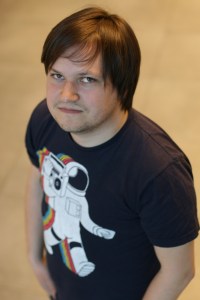
Her Inntil vi synker! – en chat med Rollespill.infos Michael Sollien


IMG_3915

Michael er redaktør for Rollespill.info og spiller i bandet Firetop Mountain.

Jeg ble første gang kjent med Michael Sollien via Rollespill.net-webforumet på Hyperions server. Vi var også samboere i kollektivet Casa Koz på Smestad for 7-8  år siden.

Michael er en Neutral Good 8. level Bard, som når han ikke spiller opp til dans er redaktør for nettstedet Rollespill.info, nylig relansert i vakker skrud.

Michael var også initiativtaker til Rollespill.nets Intensive SpillskapingsKonkurranse (R.I.S.K.), som fra 2004 til 2013 bidro til at det ble lagd en mengde korte, norske rollespill.

Vi tok en prat om veien videre for Rollespill.info-miljøet.

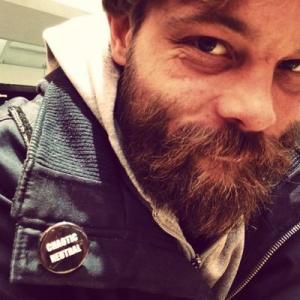
(Jeg, Ole Peder, er en Chaotic Neutral 4. level Rogue og har vært husnisse i Imagonem siden jeg var 15 år).

***

Gratulerer med nye sider. Skal si det har vært litt av et renovasjonsarbeid som har pågått i det skjulte! Hva er planen videre?

Jo, takk. Jeg tenkte jeg for en gangs skyld at jeg skulle la være å gjøre så stort nummer av ting før det faktisk var gjort ferdig. Til slutt ble sida noe jeg er veldig fornøyd med.

Den er magisk! Og pen! Og tekstene er virkelig gode. Mad props!

Takk. Jeg fikk en tilbakemelding om at sida får rollespill til å se ut som noe som er skikkelig gøy å drive med. Det er det jo, og det var intensjonen.

Yes! Og du har ganske mange planer for videre aktivitet?

Jeg planlegger å sette i gang med en podcast. Vi skal spille inn den første veldig snart. Jeg skriver også på et rollespill som skal ligge gratis på siden og fungere som en inngangsport for nysgjerrige.

Ooo… er det Basic Fantasy-oversettelsen?

Nei, det er en forenklet utgave av Dragepust, som er rollespill jeg og to andre venner har jobbet med de siste to årene.

Du forteller meg jo aldri noen ting lenger Michael?? Må vi bo sammen for at jeg skal få vite om sånt?

Hehe! Jeg har prøvd å holde ting litt for meg selv som du skjønner.

Jeg skulle *egentlig* ønske at jeg klarte å være litt mer ninja med mine prosjekter. Men nå har jeg endelig klart å lokke deg utpå… Blir dette din fantasy heartbreaker? Skal du gi Øivind konkurranse?

Det er definitivt en fantasy heartbreaker, men det er langt fra Vandrernes chill-out hippievibber. Dette er ganske crunchy high fantasy.

Kan du si litt mer om podcasten? Skuddtakt, temaer, gjester, bidragsytere?

Det blir meg og Nicolai som programledere. Det foreløpige navnet er Vertshuset, og vi tenker begynne hver episode med at vi rollespiller litt og har med bakgrunnslyder og slikt, akkurat som et mini-hørespill. Vi tenker prate mye oss i mellom, men også få inn gjester, be dem på vin i vertshuset.

Foto-Nicolai? [En av våre tidligere samboere i Casa Koz. – OP].

Ja. Jeg har ført han dypt inn i rollespillenes verden. Han er også med på å skrive Dragepust og spiller og GM-er i D&D gruppa mi.

Jeg får veldig godfot av at noen som ikke er meg eller Anders har lyst til å lage noe bra nettbuzz rundt rollespill på norsk. Det har selvsagt vært andre de siste par-tre åra, men u know.

10999804_10156135412375131_826877058609347632_n

Uglebjørnen Uglars er maskoten til Facebook-gruppa.

Hadde det ikke vært for at du har pushet så hardt med Facebook-sida og de utallige prosjektene dine for å få rollespill fram hadde jeg kanskje ikke brydd meg noe særlig tror jeg. Det er mye arbeid uten lønn.

Jeg skjønner det er verdt det de gangene jeg får tilbakemelding om at noen har glede av disse underlige prosjektene våre, tar ulike tjenester i bruk, eller at jeg ser nytteverdien direkte – som når folk finner nye spillvenner via Facebook-gruppa.

Det er faktisk ikke så mye som skal til. Får jeg en «like» eller to gjør det gjerne dagen min.

Noe jeg synes er veldig kult med at Facebook-gruppa Rollespill.info fikk sånn oppdrift siste drøye år er nettopp ninjaene. Plutselig dukker det opp folk som har et eller annet stort eller lite prosjekt. Sånn som han forleden dag som hadde gitt ut et d20 Viking-supplement i 2008. Hadde jeg absolutt aldri hørt om, og jeg liker å tro at jeg følger litt med på disse greiene.

Ja, jeg så det. Dritkult! For ikke å snakke om han med Insight-systemet. Den kom fra sidelinja.

Ja. Han har haugevis av «likes» på Facebook-siden til spillet. Kanskje det finnes et helt lite miljø for det der.

Kanskje. Når det gjelder lønn for arbeid går tankene fort til R.I.S.K. Jeg har ikke skrevet alle de spillene, men jeg føler en stolthet og et slags eierskap til dem alle siden jeg tok initiativet til konkurransen i 2004.

Vandrerne ble jo til med R.I.S.K. så jeg kommer til å kreve 25% av Øivind.

Stå på krava! R.I.S.K. er jo også en greie… ja. Du organiserte nesten hvert år 2004-2013?

Jeg organiserte ikke alle omgangene, men det er kult å se ringvirkninger av et frø man sådde for over 10 år siden.

Som i går da jeg fikk en tweet fra noen som lurte på om det går å spille Inntil vi synker med 6 spillere.

nsDet har hendt jeg har bladd litt arkivet. Utrolig mange morsomme og snurrige konsepter. Mest skisser, kanskje. Men ja: sånn som Inntil vi synker ble jo en bitteliten kult-hit, også i indiemiljøer utenlands. Nørwegian Style-antologien og dermed bloggen hadde neppe blitt det samme uten R.I.S.K…
Og med bloggen snakker vi ting som virkelig har fått en viss internasjonal oppmerksomhet (i et lite miljø, riktignok), som Archipelago. Matthijs har definitivt vært primus der, men mange av de tidlige bidragene er RISK-ting, Tomas’ konsept med rollespillpoesiene ble poppis, og det har vært en del oversettelser til andre språk enn engelsk.

Jeg måtte bla i hele arkivet ganske nylig fordi av en eller annen grunn ble lenkene fra den forrige nettsida brutte, så jeg måtte laste opp alle spillene på nytt. Det er mye gull der som jeg har lyst til å spille.

Når skal du lage Rollespill.info-con?

Hø! Det har jeg ikke tenkt på, men nå som du ga meg ideen, er den ikke så dum, og det kan godt hende jeg gjør det etterhvert.

Det kan ikke bli for mange cons, så hvorfor ikke.

Noe annet du skal lage, enn det vi allerede har vært inne på?

Det skorter ikke på ideer akkurat, men utover det som er nevnt skal jeg bli ferdig med oversettelsen av Basic Fantasy etterhvert.

Rune Valle og Simen L. Stangeland har kanskje bidratt mest utenom meg selv. Vi er ferdig med ca. 50-60 sider av 170. Det skal sies at vi har kommet til monsterkapittelet, og der er det mye bilder, og mindre tekst. Jeg vil anslå at vi er cirka halvveis i oversettelsen sånn sett.

Rune!!! Er han løsøreansvarlig?

Han er løsøreansvarlig ja. :)

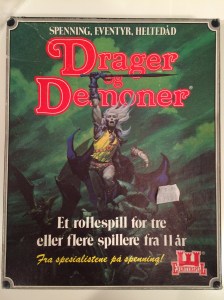
IMG_1088Rune og faren hans GA meg Drager & Demoner-boksen her i våres. Dæven, det var snilt.
Det var snilt. Den er søren meg magisk ass.

Var den i god stand eller?

Near-mint, tror jeg de kaller det.

Så kult. Jeg angrer på at jeg ikke behandlet min litt bedre. Jeg har fortsatt mesteparten av innholdet, men jeg tror jeg kastet boksen en gang på nittitallet.

Tror faktisk aldri jeg eide den, men den var definitivt en av de viktige inngangsportene. En fetter hadde, et par kompiser hadde… Det står på coveret at den er ment for 11 år og opp, men den er jo rimelig… metal da, hvis man tenker på den aldersgruppen.

Og det tror jeg var lurt for å appellere til nettopp den målgruppa. Kulere enn et «barnevennlig» produkt for en 12-åring. Men jeg veit ikke åssen det gikk med salget, om det var tilstrekkelig antall foreldre som var villige til å punge ut. Jeg ønsket meg ganske mye mer He-Man enn jeg fikk noen år tidligere, for å si det sånn.

Jeg slukte alt som var litt metal og edgy som ung. Fant først ut mange år senere at rollespill var «geeky». Jeg synes det var skikkelig punk jeg.

Jeg… vet ikke helt hva jeg tenkte. Tror jeg bare opplevde det som jævlig magisk. Mulighetene det åpnet. Akkurat som «Den uendelige historie», bare enda bedre. Narnia 4 real.

De to eksemplene er i hvert fall ikke metal, men de gjorde dypt inntrykk på meg.

Jeg så etter noe slikt andre steder i livet husker jeg. Jeg likte dataspill, men jeg savnet et eller annet det ikke ga meg.

Mm… ja. Jeg spilte mye Amiga i samme periode. Men dette var på en annen frekvens. Bedre oppløsning.

Jeg tenker det er mange som har lignende behov nå. Det er mye bra med digitale spill, men man kan føle et savn etter noe som er mer grunnleggende kreativt og sosialt.

Hvordan går man frem hvis man vil bidra til Rollespill.info? Hva slags bidrag ønsker du evt?

Du tar bare kontakt med meg via konvolutten øverst til høyre på sida. Jeg tar gjerne imot bidrag av alle typer, gjerne også arrangementer og ting du ønsker litt boost på.

Jeg ønsker meg noen kule dungeons eller moduler, gjerne systemfrie så det kan brukes til flere spill.

Har du rukket å prate noe med Christine om eventuelt Båtsj-R.I.S.K.-samarbeid? [Båtsj ble avholdt på Facebook-gruppa i høst, og er på samme måte som R.I.S.K. en konkurranse som går ut på å lage et rollespill på en uke.]

Ikke så mye, men jeg har tilbudt meg å bruke Rollespill.info som en plattform til innleveringer og slikt når den tid kommer. Dritkult at Christine tok tak. Det er så bra når folk bare setter i gang med ting og ikke bare snakker om det.

Jeg synes det har vært bra mye liv i år, egentlig. Vandrerne kom ut, Båtsj, det rundt Basic Fantasy, de nye sidene dine, kraftig vekst på Facebook-gruppa. De forskjellige prosjektene til Ragnhild og Kaisa: JenteCon, Modulmekkeprat, Rollespillalliansen med sine greier…

Det har vært et helt utrolig år for rollespill “all over” vil jeg mene.

2fzuXpym

Ole Peder er husnisse i Imagonem.

Da Facebook-gruppa ble starta i 2012 het den Rollespill.net, men den nettadressen ledet den gang ikke til noe som helst, tror jeg.  Det var også ting som tydet på at Hyperion ville fase ut webforumet. Derfor bestemte vi oss for å omdøpe Facebook-gruppa til Rollespill.info, som også var navnet på nettstedet du hadde starta. Hadde vi en plan? Jeg husker ikke helt. Planen med Facebookgruppa var opprinnelig, veit jeg, å sluse trafikk tilbake til Hyperion-forumet og prøve å drive litt sånn kunstig åndedrett på det. Men det var det jo null interesse for blant Facebookbrukerne. FB-gruppa vokste jevnt og trutt, hjulpet av mine sporadiske rekrutteringsraptus i relaterte grupper. Og i våres nådde vi vel et slags kritisk masse, med 1000 medlemmer i påsken. Men hadde vi en plan? Jeg vet ikke nødvendigvis om man trenger en plan for alt man gjør, men synes de greiene der har fungert overraskende bra. Rimelig bra nivå på diskusjoner, brukerne ter seg jevnt over eksemplarisk, osv. Hvordan ser du for deg samspillet mellom nettstedet og Facebook-gruppa framover? [Jeg opprettet gruppa, men takket av som moderator nå i høst. – OP] 

Planer er for pyser tenker jeg litt for ofte. Nettsida Rollespill.info er nå en side som dukker ganske høyt opp når du søker på «rollespill» i Google. Åpner du sida skal du kunne finne ut hva rollespill er, og du skal kunne diskutere og bli medlem av miljøet med noen få museklikk. Det er i hvertfall min største intensjon med sida.

Jeg tenker egentlig ikke på Facebook-gruppa og nettsida som to forskjellige ting. Det er en del av hele pakka.

Some tips for new Game Masters

Photo: olepeder

Photo: olepeder

(Please note that many games, particularly newer ones, will have some of these tips integrated as part of the method. Have some good tips of your own? Please let us know in comments).

Creating the characters

  • Create the characters together in the group, or at least spend some time in a physical meeting or via e-mail/Facebook group talking a bit about the campaign you want to run.
  • Make sure the characters have some points of contact to each other. Figure out why they will experience things together as a group (most roleplaying games still presuppose this as a default, though there are exceptions). Do they already know each other? Are they stuck in the same situation? What ties them together?
  • Make sure the characters have some interesting weaknesses/challenges to overcome. Preferably also some clear goals (that do not conflict with each other to the extent that they can’t cooperate).
  • Drama = conflict, but if the conflicts between characters are too big, the campaign might be short-lived.

Setting up the game

  • Plan adventures and campaigns based on the character’s background, interests, skills, goals and motivations. Let them be the main characters. Tie important elements of the plot directly to the characters.
  • Plan starting points and “hooks”, not solutions. Preserve the player’s freedom.
  • When preparing an adventure: give yourself a framework for improvisation, not a finished map over how events will play out (players generally dislike being “railroaded”.) This will ensure both your and the player’s freedom during play. The game is created at the table, not in your study in advance of play.
  • Don’t cling too tightly to your secrets, bring them into the game. The true excitement is in seeing what happens when the secrets are revealed.
  • Non-player characters (NPCs) are one of your most important tools. Plan a handful of these in advance of the game. Write briefly, just a few keywords about who they are. Sketch them out in a simple “relationship map.” How do they relate to the characters? To each other? How do they relate to the plot? What’s their agenda? Write them down between each session of play.
  • Having prepared a simple list of a dozen typical men’s and women’s names from the setting can come in handy when you have to name NPCs on the fly, during the session. – Don’t spend lots of time preparing things you feel reasonably certain will never see play.

During the game:

  • Make sure all characters get some spotlight, and all players get a chance to speak.
  • Follow up on player’s initiatives and ideas. Reward them, add to them. Maybe their ideas are just as good as what you’ve planned.
  • Players will rarely do exactly what you expected. This is a strength, not a weakness, of roleplaying. Relish the opportunity to improvise and think at the drop of a hat. Take a short break if you need to gather your thoughts.
  • Breaks are good. A bit of food before or after the game is good. Some snacks is good. Many groups like playing with a bit of atmospheric music. Some GMs use prepared handouts. Most groups will need dice, books and some pencils and paper to make notes with. Cell phones are a distraction. Ask players to turn off the sound and put them away. They can check them during breaks.
  • It’s better to allow frequent, short breaks than a lot of off-topic conversation during the game.
  • Use the player’s imagination. Ask them what the setting looks like, what the character is wearing, how she’s feeling, if the character knows anyone in the area, etc. Never reduce them to a passive audience, they should be active participants and co-creators (otherwise, they might as well be watching a movie). Build on and add to their input.
  • If you are not ready to have the character fail at a given task, don’t ask the player to roll. “Say yes, or roll the dice”.
  • Be careful giving the players challenges where there is only one possible solution. Try to leave challenges open, possible to solve in various ways. You don’t always have to picture a solution in advance, leave it to the players.
  • Make some notes as you go. Write a brief synopsis (half a page should suffice) after the game. This documentation will prove a goldmine when planning future sessions.

Timing and dramatic sense

  • As game master in traditional games, you have a lot of freedom to establish scenes where you want, decide which characters and NPCs are present, and what is going on when the scene starts. You can start in the middle of the action, spend time on exposition, cut a scene when it feels *dramatically right* rather than when the players are starting to get bored. Keep the action moving, at the same time as you’re preserving player freedom (you’ll get better at this balancing act given experience).
  • Timing. You’ll train your sense of dramaturgy by experience, and start with what you got. You’ve seen movies, played games, read books. A lot of this is already in your blood, and you’ll learn as you go. We are never fully taught as game masters. Timing has to do with when you reveal secrets, introduce new threats, cut scenes, raise your voice, whisper, sit quietly and just stare at the players for a quarter of a minute, or put on *that particular* song.

Check out the great website Learn to Play Tabletop RPGs

Best of luck!

Thanks to: Morten H.

Det brygger til storm

Etter åtte år er spillskaper Øivind Stengrundet (39) klar til å bringe hjertebarnet Vandrerne til verden. 

Over øyplaneten Terrenia slynger det seg usynlige bølger av ren energi. Men med rundt 100 års mellomrom slår disse bølgene seg vrang, og danner magistormer. Da forandres alt: øyer fødes eller synker i havet, nye planter skyter opp av bakken, steiner og trær blir levende, katter får seks bein, og andre merkelige ting skjer. Planetens beboere lever hele tiden med uvissheten om hva som vil skje ved neste storm.

Vandrerne er et forbund av utvalgte med mål om å kartlegge verden slik den er i dag, så den ikke skal bli glemt neste gang magien går amok. De løser mysterier fra gamle sivilisasjoner, og hjelper innbyggerne med problemer stormene skaper.

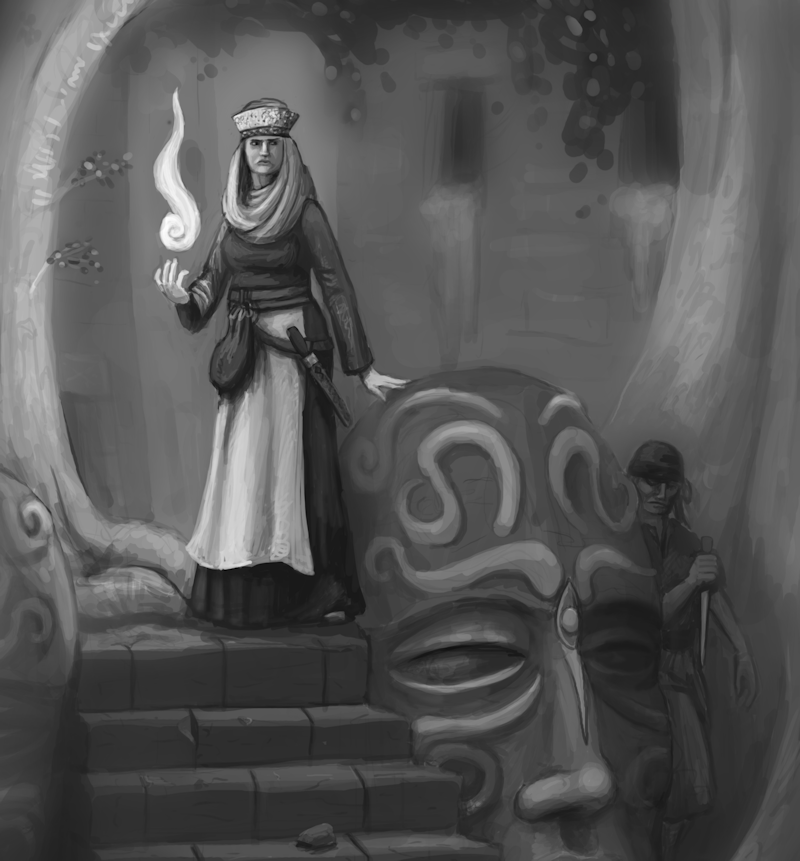
Illustrasjon fra boka: MajdAddin Alhasi.

Illustrasjon fra boka: MajdAddin Alhasi.

Vandrerne er også et flunkende nytt norsk rollespill. Den første utgaven av spillet ble skrevet i 2007, til en spillskapingskonkurranse på webforumet Rollespill.net. Konkurransen gikk ut på å skrive et komplett rollespill på bare sju dager.

– Jeg var nysgjerrig på hvor minimalistisk et spill kunne være og likevel regnes som komplett. Med det utgangspunktet har jeg bygget videre på manus, sier forfatter Øivind Stengrundet.

I første omgang vil alt salg foregå via nettsiden, vandrerne.net, men forfatteren vil også gå i dialog med lokale bokhandlere og nasjonale spesialforretninger. Nettsalget åpner onsdag 9. september.

Testet med elevene
Selv begynte han med rollespill på begynnelsen av 90-tallet. Stengrundet jobber som lærer ved Trysil ungdomsskole. Han opplevde fin støtte i skoleverket under arbeidet med Vandrerne.

– Da jeg jobbet som lærer på en barneskole for noen år tilbake fikk jeg rollespill inn på timeplanen, med en liten gruppe elever som trengte gode opplevelser og sosial trening mer enn noe annet. Det ga meg en flott mulighet til å teste ut spillet, og mye av det vi gjorde den gangen har kommet inn i det ferdige rollespillet, sier spillskaperen.

Etter å ha gått noen runder med et norsk forlag har Stengrundet til slutt landet på at egenpublisering er veien å gå i denne omgang.

– Forlaget virket interesserte, men pekte på et avgjørende problem: rollespill kommer ikke inn under innkjøpsordningen, som sikrer forlagene et minimumssalg. Spillene faller midt mellom fag- og skjønn-litteratur, og dermed turde ikke forlaget å gi ut spillet. Jeg holdt derfor på å putte hele prosjektet i skrivebordsskuffen, sammen med veldig mye annet, men etter at bekjente med ujevne mellomrom fortalte meg at de spilte det, bestemte jeg meg for å gi det ut selv.

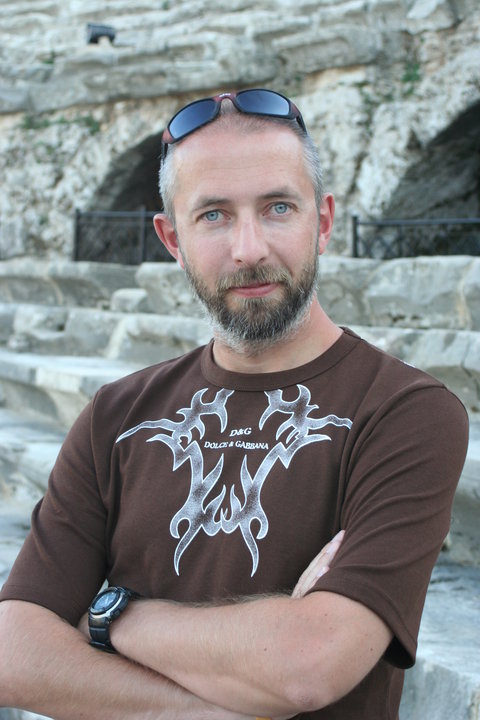
Forfatter og spillskaper Øivind Stengrundet (39). Foto: Privat.

Forfatter og spillskaper Øivind Stengrundet (39). Foto: Privat.

– Kan du si litt om det å gi ut rollespill på egenhånd?

– Da jeg først bestemte meg, gikk det egentlig ganske fort. Jeg undersøkte ulike publiseringsløsninger både innenlands og utenlands, og fant ut at jeg gjerne ville ha eget ISBN-nummer på boka. De fleste utenlandske aktørene opererte med egne systemer, og dermed konsentrerte jeg meg om norske løsninger. De fleste av disse var imidlertid ganske dyre, med høy egenandel og lite utbytte for forfatteren. Dermed endte jeg opp med å registrere et eget forlag, uten å starte enkeltmannsforetak, og registrere meg i ISBN-registeret. Så undersøkte jeg priser ved diverse trykkerier. Den største utfordringen kom kanskje når layout-jobben skulle gjøres, og her skulle jeg nok ønske at jeg hadde mer kompetanse. Men litt svetting og banning senere ble jeg fornøyd, og jeg er veldig stolt over hvordan spillet har endt opp.

Slippfest
Boka Vandrerne er på 120 sider, og inkluderer eksempel-eventyr. Forfatteren sier boka inneholder alt man behøver for å komme i gang med spill. Systemet benytter vanlige spillterninger med seks sider. I første omgang trykkes det 150 eksemplarer.

Rollespillet forside er illustrert av Zaina Isard.

Rollespillets forside er illustrert av Zaina Isard.

– Siden jeg har alt liggende digitalt vil det være en smal sak å trykke et nytt opplag. Jeg har valgt ikke å gå bredt ut etter sponsorer eller støtte-ordninger, men jeg er veldig glad for at hjemkommunen Trysil har gitt noen kroner til utgivelsen, sier Stengrundet.

Det blir slippfest i Oslo 3. oktober (sted annonseres på Facebook-gruppen Rollespill.info). Ordinær pris blir 199,- (inkludert porto), mens boka blir noe billigere på slippfesten.

Vandrerne-roman nært forestående
– De viktigste støttespillerne mine underveis har vært deltakerne på det gamle rollespill.net-forumet. Det var her den første utgaven ble lansert, og jeg fikk mange gode råd og tips derfra. Jeg vil spesielt trekke fram Matthijs Holter og Ole Peder Giæver [meg! – journ. anm.], som har vært ivrige pådrivere og spilltestere underveis. Jeg må også takke tidligere undervisningsinspektør Bjørn Matsson, samt elevene som deltok i spillgruppen min på barneskolen.

Illustrasjon fra boka: Ståle Tevik.

Illustrasjon fra boka: Ståle Tevik.

De innvendige illustrasjonene er alle i sort-hvitt, og det er omkring 30 illustrasjoner fra 9 illustratører i Norge, England og Tyrkia.

– Fordi jeg ville håndtere utgivelsen selv, gikk jeg i utgangspunktet ut med et «billigst mulig»-prinsipp angående illustrasjoner. Jeg hørte litt rundt om noen kunne tenke seg å bidra bare for æren, men jeg innså etter hvert at jeg måtte belage meg på litt utgifter på dette feltet. Illustrasjonene har derfor kommet fra en blanding av glade «amatører» og profesjonelle kunstnere. Hvis jeg skulle gjort det hele på nytt ville jeg nok ha benyttet færre, utvalgte illustratører for å sikre en gjennomført stil, men jeg er veldig fornøyd med måten illustrasjonene har endt opp.

Mange av tekstene i boka har skjønnlitterært preg. Det finnes også korte noveller fra spillets setting på hjemmesidene. Forfatteren er ikke snauere enn at han parallelt med å ferdigstille Vandrerne har skrevet en roman satt til spillets univers! Denne kommer ut senere i høst, også på eget forlag.

World Building for RPGs


Many of us are fond of creating new settings and worlds, both for use in role-playing campaigns, but also as a hobby unto itself. 

In 2012 I wrote a short chapter about this in “The Little Book on Role-Playing” (in Norwegian). This is an expanded follow-up, that can be read independently of the first article. 

At the end of the article, you will find a list of exercises to get you started. Thanks to Ara Kooser for valuable input.

Some of my main points from the first article:

Procedurally bound meticulous,  «top-down» methods are difficult for me when I reach some element that doesn’t turn me on. Say «wind patterns», «laws» or something. It gets hard to push through, and I’ve often laid my worlds aside.

Figure out what the world is for. Role-playing games? A novel? Various uses could demand different approaches to world building.

Leave aside apocryphal, obscure details that will never see play (or the reader will never meet). Stick to the juicy stuff, at least for now.

Illustration: Karenswhimsy.com

Illustration: Karenswhimsy.com

For an RPG, focus on setting elements the characters will actually interact with and, preferably, are able to affect/change.

Collaboration is good. Listen to your players, they’ll give you cool, free ideas and pointers to what they’re interested in. Maybe even involve them directly in the world building process, if they’re so inclined.

This article presumes you’re building a role-playing setting, and most of the examples are from fantasy worlds. But I believe many of the ideas could work for other types of settings as well.

VISION

I think it can be smart to start with some kind of common vision or mood you wish to convey. It can be from a genre, like “action archeologists explore jungle-ruins in South America with lots of wild monsters and Nazis”, some scene types you wish to make room for: “a lot of climbing over roofs and burglary in tall towers”. “Meeting demonic, tentacled creatures from the other side of the stars”. “Corrupt court intrigues”.

The vision can also tell us something about what kinds of characters we’ll see: «nobles with a focus on feudal loyalty and ancestral bonds» or «rough barbarians trying to survive in the wilderness, as civilization draws near». With the vision at the back of your mind I think you can get a lot of free ideas when you’re establishing other parts of the setting.

The other elements aren’t organized in a prioritized order. Start with what seems most inspiring right now, leave the rest for later.

COLLABORATING

Maybe you’d like to meet up, and spend an afternoon/evening developing the basic concepts. Maybe you’d like to write a few e-mails to and from. Some like using a Wiki, others find it to be a bit of a hassle.

Who’s in, who has the final word?
It could be a good idea to choose a «main editor» who has the last say on what goes in the final setting manuscript (or wiki, scroll or whatever format you choose). Maybe it’s sufficient if a couple of you work out the main concepts of the world, and then others can add later on (through character backgrounds, by being given special responsibilities for certain areas, or by taking turns being the game master).

When we recently established a fantasy setting on Mars for a D&D5 campaign, we mainly used e-mail correspondence. The players wrote down their thoughts and ideas for characters and concepts surrounding these: the people they belonged to, and the areas they were from. We met two “problems” which both found a solution. One thing is that I wrote far more than the others. But my character was the only one from Earth, so that whole domain was sort of left to me. A more tricky problem was when two of the other players created character concepts that were “mutually exclusive”; one player thought their people’s biology and gender worked in a different way than the other player envisioned. I think it was solved simply because one of these players couldn’t join the campaign after all. But those are the kinds of challenges you can face when attempting collaborative fiction.

For some ideas to how you can structure a collaborative process/conversation, I suggest you have a look at the «phrases» in the game Archipelago III for inspiration on how this can be handled.

GUIDELINES

My friend Magnus and I sit down and create a campaign concept together , I don’t think we’d really need many «formal rules». We could base ourselves on normal, everyday conversation. We’ve known each other, played role-playing games and designed things together for 16 years. We have similar tastes in fiction. It would probably have worked just fine.

The more voices who are to be heard in a collaborative process, and the more people who don’t know each other in advance, the more need there can be for some “social contracts”. 

When my friend Maja held her «World Building Workshop» at HolmCon one year, she started by having us make a list over concepts we didn’t want to have in the setting. I think we took turns around the table, where everyone could veto one concept. E.g.: no zombies, no steampunk, no dick jokes, etc. At first I was a bit skeptical; this was almost the opposite of a brainstorm, I thought. But I also saw how it contributed to us finding out where we wanted to go by clearly defining where we didn’t want to go. 

Taking turns around the table is also a good way of making sure everybody gets to contribute, or you could limit how many e-mails with new setting information Ole Peder gets to write every day, etc. 

Brainstorm is defined by a “say yes”-attitude. No ideas are too stupid. We throw out everything we can think of, build on other’s ideas and then later on have a process of trimming away what doesn’t fit in, or concepts we don’t believe in. In this trimming-down process, it’s important not to be “married” to your ideas.

Could this work as a map? Illustration: Catherine Mommsen Scott/Flickr.com/Creative Commons

Could this work as a map? Illustration: Catherine Mommsen Scott/Flickr.com/Creative Commons

MAPS AND GEOGRAPHY

Maps can be a nice visual focus. It’s sufficient with a rough sketch at first. If one of you enjoys drawing, she can make a more refined version later. Use simple symbols, so that everyone can help draw. Leave some white spaces on the map, to be filled out when the need arises later.

If it’s a fantasy setting: some mountains here, a coast line there, some islands, woods… If the setting is a starship travelling between galaxies: some kind of simplified plan of the ship. City environment: main streets, harbor area, important nodal points, define the largest boroughs, etc. 

As you draw the various symbols and topographical elements on the map, tell the others a bit about your suggestions. They can then follow up with their own input.

Rolemaster had something called «Campaign Law» which actually has a quite inspiring «quasi scientific» guide to building cosmology, geography (and societies, later on). It can be found over here.

CHARACTERS

Some of the character concepts can be established while building the setting. What kind of stories are you making? How do the characters belong in these? Are they nobles or wandering adventurers? Where are they from originally? What’s that place like? How has it influenced them?

In addition to characters, it can be nice to imagine some secondary characters (NPCs), both well off, powerful and good/bad/ugly: the king of the River City, the import baroness of the Hill Country, the wizard in his tower. But also consider those one rarely thinks about, but who might have an exciting destiny: the inn keeper who runs the northernmost tavern in the world, and gives the characters a hideout from ghosts, the mother of one of the characters who has been driven away from her village, the street urchin who can control fire.
Characters and NPCs can be tied to each other in relationship maps, where you draw some arrows connecting them with words like “rivals”, “lovers”, “best friends”, etc.

WHY ARE YOU MAKING THIS?

As I wrote initially: What’s the purpose of the setting? Is it for a role-playing campaign? How long will it be? Can the world grow as you explore it, or do you want lots of details before you begin play? Is it sufficient if the main concepts are firmly established, or do you want to know every detail about major cities, important leaders, culture, history and religion? It’s a different job to create a world for a series of novels than for a role-playing campaign (at least I tend to think so). In the campaign it can actually be a bonus with “blank areas on the map”, even for the game master. It gives you more freedom to improvise, the engine of role-playing.

It might be a different job to type up a short, focused campaign than one that will support scores of sessions. Make sure you save some of the enthusiasm for play proper! You’ll learn a lot about the setting by playing in it. Make things short and focused. Write it down, but keep descriptions brief. Keywords or a few sentences may be enough. It can be hard to get everyone involved in updating a Wiki or writing recaps after game nights. Not to mention the fact that not everyone bothers to read all that material. But it’s an important task, to let (especially the game master) keep track of the world as it grows and branches in your collective imagination.

SOME TYPICAL ELEMENTS

Some starting points when discussing the setting. Establish some of these, but you’re welcome to keep it brief and sketchy. Skip to the next topic when you feel you have some fun ideas established. It’s enough to say “monotheistic religion dominates society”. The details about the church, its rituals and hierarchy can come in play later on or next time you meet. Establish a few main points of interest first, the large, heavy elements that butt against each other and create interesting tension.

Maybe you're build a retrofuturistic setting?  Illustration: Louis Glanzman. Creative Commons.

Maybe you’re build a retrofuturistic setting? Illustration: Louis Glanzman. Creative Commons.

Establishing these elements can also be made into a game within the game, if you’re so inclined. See, for instance, how it’s done in “Microscope”, where you explore and build a setting through playing out short scenes from its history. Or “Shock”, where you define social issues the science-fiction world is about before you engage it through play.

CONFLICTS

It can be good to establish some large, overarching conflicts in the setting. Which groups are pitted against each other? Is there a battle over certain resources? Do you have some kind of «Evil Overlord»? Or several? Here you can both consider real history, social anthropology etc, or think in «purely dramatic terms». Maybe there’s a particular kind of social rules that are the source of eternal tension in society? The elves have to sacrifice a hundred human souls every year to appease their gods = conflict between the elves and humankind. Those who are not baptized become evil undead upon death = great pressure to be baptized. The church may have huge territories, but few weapons. The nobles may have weapons, but their lands are of less value because of war, drought, heritage systems splitting them up = conflict. Conflict is usually considered the classic recipe for drama. Not necessarily the only one or the most interesting, but at least one it’s good to be aware of. One group wants one thing, one or more others want something else, and there’s conflict.

«Shepherd Boy». Kilde: Watts, Arthur: “A Painter’s Anthology” (1924). Public domain.

«Shepherd Boy». Kilde: Watts, Arthur: “A Painter’s Anthology” (1924). Public domain.

HISTORY

I’m not a great believer in tens of pages with timelines, but it can be good to sketch out some important events in the world’s history. Large wars, plagues, discoveries, technological advances, migration, etc. I’d suggest you make a sketch of the earliest history, going into more detail as you approach the date when the game will begin.

MAGIC AND RELGION

It can be good to picture which gods and supernatural forces people believe in, and what kind of magic exists (if you want to have magic in the setting). There are many rich traditions in our own world you can be inspired by. Maybe you’d like something reminiscent of a Greek (or Norse) pantheon where the gods are archetypes reflecting aspects of the human mind or nature itself. Maybe you want a monotheistic religion, or maybe there’s some kind of mystic order dominating society, with a clergy who want to achieve illumination, unity with the Godhead or something similar. Maybe magicians are shamans, going on “spirit travels”, eating “magic mushrooms” and contacting the elemental forces of nature. Maybe you have traditional fantasy wizards reading up on the dark arts in tall towers (I’m sure you and your creative players will be able to do something interesting even with that old trope). Are there monks, nuns and monasteries? What kind of rules apply there? What is the religious tolerance in society like? Are heretics burnt on the fires of the Inquisition, or are you free to believe whatever you want?

POLITICS

It can be good to define the most important geographical areas and write a bit about how society works there. Are they large empires, tiny city states or a mix? Are they feudal societies, oligarchies, or organized in other ways? Do you have contested border areas where war still reigns? What is life like for the peasants and commoners of those areas? Fantasy societies often feel a bit like the Medieval Ages in Europe, with farmers, nobles and clergy, and feudal structures where the nobles swear loyalty upwards in a «power pyramid”, with the King/Queen/Empress on top. Some of the tension in these societies is based on the power struggles between the various orders, but also internally in the nobility, and between the nobility and the king. Maybe you’d like to be inspired by other historical societies, or try to construct something of your own.

GROUPS

We’ve already touched on nations, religious organizations, social orders and others. There are probably other important groups in the societies you create. Maybe guilds are important, a kind of proto unions for various kinds of workers and craftsmen. Maybe there are criminal organizations. Are «adventurers» organized in any way? Rebel groups, heretic sects, non-human intelligent creatures.

THE SUPERNATURAL

Building on what you’ve established about magic and religion, you can consider if there are any fairy tale creatures, demons and other supernatural beings in the world. Maybe you’d like to use elements from games already published (the D&D Monstrous Manual comes to mind). Maybe you’ll base yourself in the folkloric traditions of a specific country in our own world, mythology or other historical sources. Or try to create monsters from the ground up. If any of these creatures are intelligent; how are they organized? Do they live in societies? Are they part of human society, living in cities, or are they living in deep forests and dark valleys, hidden to the eyes of man?

WORLD BUILDER EXERCISES

Some creative tasks to jog your group’s imagination. Can be solved individually or as a team effort. I’d advise against trying to solve all the tasks. Pick 1-3 you like. 

You can also make up more exercises yourselves.

* Draw a creature or person from your world.

* Who is an outsider in your setting? Why? What does it mean to be an outsider? 300 word limit. 
* Describe a sacred site or object. Use as many characters as you want, but do not explain anything about the setting cosmology in your description.

* Write down three words in one of the languages of your setting.

* Write down five keywords about the mood you wish to convey.

* Use at most 1000 characters on a mood text about the setting.

* In five sentences, describe how religion works in people’s daily life.

* Write down a brief timeline.

* Decide which element in the setting you are least happy with. Delete it from your script.

* Think of three movies/books/comics that would work as inspiration for your setting.

* Find a photo or illustration with Google Image Search/Flickr/Wikimedia Commons that matches your setting.

*Invite some friends. Tell them about your setting. Take their tips, write them down.

* What is the worst profanity uttered in your setting? Why is this so bad to say?

* Do the gods exist?

* Which event on your timeline would you most have wanted to witness?

* Which event on your timeline would you avoid being present for at all cost?

* Create a character for any role-playing game that would fit with your setting.

* Which person would you most like to be in your setting?

* Choose an area on your map. Write five sentences about this area.

* Describe the three most powerful people in your world.

* Describe three of the least powerful people in your world.

* Describe a war in no more than 1000 characters. Who fought whom? Where did the major battles take place? Who won and why? What consequences has the war had? What was the war fought over?

* What is the oldest civilization in your setting? Does it still exist?

* What remains are there after this civilization? If it’s still alive, how has it changed over the centuries?

* Create a Spotify playlist for your setting.

* Describe the three largest groups of people, briefly.

* Pick one of the three. Describe their culture, briefly.

* Write down as many keywords (not complete sentences) about the setting as you can.

* Choose an area/people/city in your world. Write down a list of keywords and loose associations about it.

* Write down three sketches for cool/interesting scenes that could happen in your setting.

Earrings found in 1915 by Gyeongju. The diametre of the circle in the middle is 3,5 cm. Photo: National Museum of Korea/Wikimedia Commons/Creative Commons.

Earrings found in 1915 by Gyeongju. The diametre of the circle in the middle is 3,5 cm. Photo: National Museum of Korea/Wikimedia Commons/Creative Commons.

* Write down three sketches for supporting characters.

* Write down three sketches for campaign concepts.

Stemmen fra ådalen

En blog om rollespil af Morten Greis. Fra Tryggevælde ådal en dyb klang. Elverpigernes dans. Røre i det hvide slør. Disen hyller landskabet. De gamle stammer krogede trolde.

christines rant

This is my speaker’s corner where I can rant about popular culture, geeky and general stuff that amaze or irritate me. Many things do. Irritate me, that is.

Realm of Melpomene

"I reject your reality and substitute my own!"

anyway.

"I reject your reality and substitute my own!"

Nordic Larper

Thoughts on scandinavian style live action roleplaying

Nørwegian Style

Norwegian roleplaying games in English